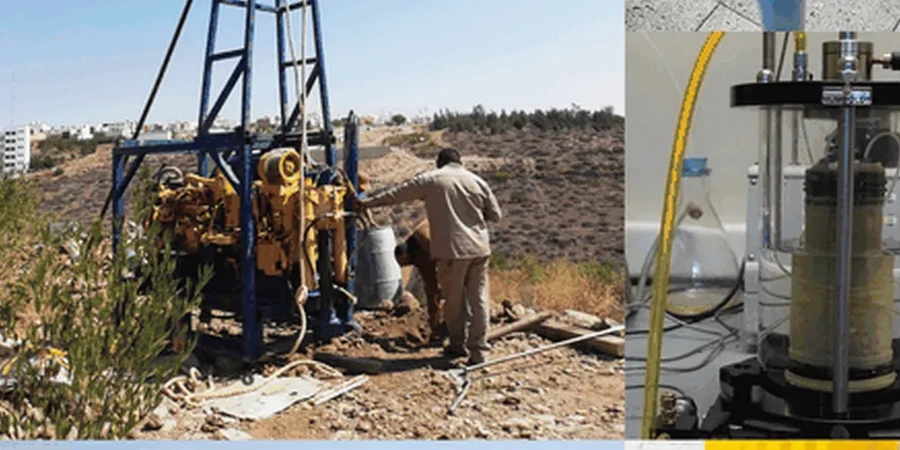
Chilliwack sits at roughly 10 meters above sea level on the Fraser River floodplain, where subsurface conditions can shift dramatically within a single lot. Developers here deal with silty loams, glacial till, and pockets of compressible clay that make standard foundation assumptions risky. A soil mechanics study in Chilliwack cuts through that uncertainty. Our technicians log each stratum, measure strength, and deliver a geotechnical model that respects local geology. Last year alone, over 200 building permits were issued in the city, many requiring site-specific shear strength parameters before excavation could begin. Working with the local river terrace deposits demands more than textbook formulas.
The difference between a foundation that performs for 50 years and one that settles prematurely often comes down to correctly identifying the plasticity of the silty clay layer at five meters depth.
Site-specific factors
Two sites separated by just a few hundred meters in Chilliwack can present radically different risk profiles. A parcel near Sardis may rest on well-drained glaciofluvial gravels with a site class C, while another closer to the Fraser River sits on soft, normally consolidated clays that classify as site class E. A soil mechanics study in Chilliwack immediately flags these contrasts. Ignoring the variability means risking angular distortion in the superstructure, cracked partition walls, or worse, a bearing capacity failure during a seismic event. The 1946 Vancouver Island earthquake, felt strongly in the Fraser Valley, serves as a reminder that deep soil amplification can magnify ground motion. Our reports quantify total and differential settlement under service loads and check the factor of safety against sliding for retaining structures.
Frequently asked questions
How long does a soil mechanics study take in Chilliwack?
Fieldwork typically wraps up in one to three days, depending on the number of boreholes and access conditions. The laboratory program runs another seven to ten business days. You can expect a final geotechnical report in roughly three weeks from mobilization, though we can expedite sections for urgent foundation decisions if your structural engineer requests it.
What does a soil mechanics study cost for a single-family home lot in Chilliwack?
For a typical single-family residential lot in the Chilliwack area, the combined field investigation, laboratory testing, and engineering report ranges from CA$3.780 to CA$8.040. The final figure depends on the number of boreholes, depth required, and the suite of lab tests selected. A multi-story or hillside project with retaining walls will fall on the higher end due to additional slope stability analysis.
Do I really need a soil mechanics study for a small addition to my house?
If the addition changes the load path or adds a story, the City of Chilliwack building department will likely request a geotechnical letter. Even a small footprint can be affected by the compressible clays found in parts of the floodplain. A limited study with one borehole and basic lab tests confirms the existing footings can handle the extra load and satisfies the permit review.