Together, we solve the challenges of tomorrow.
LEARN MORE →In Chilliwack, the performance and safety of any structure begin below ground. The foundations category encompasses every engineered system that transfers building loads to the earth, from shallow footings for single-family homes to deep systems for commercial towers. Given the city's position in the Upper Fraser Valley, understanding local subsurface conditions is not optional—it is fundamental. A properly designed foundation mitigates settlement, resists lateral soil movement, and protects against seasonal moisture fluctuations that are common in this region of British Columbia.
Chilliwack’s geology presents a varied profile that directly influences foundation selection. Much of the urban core sits on glaciomarine and alluvial deposits from the Fraser River, which can include compressible silts, loose sands, and pockets of high-plasticity clay. These soils are often prone to settlement and can exhibit low bearing capacity, particularly in areas near the Vedder River and Sumas Prairie. Additionally, the region’s high water table and significant annual precipitation create conditions where hydrostatic pressure and expansive clay behaviour must be carefully managed. This variability means that a site-specific geotechnical investigation is the cornerstone of any reliable foundations design in the area.
The regulatory framework governing foundation engineering in Chilliwack is set primarily by the British Columbia Building Code (BCBC), which adopts the National Building Code of Canada with provincial amendments. These codes mandate minimum bearing capacities, embedment depths, and lateral support requirements based on soil classifications. For deep foundations, the Canadian Foundation Engineering Manual (CFEM) provides the standard of practice, and professional engineers must adhere to the guidelines set by Engineers and Geoscientists BC (EGBC). In seismically active zones—which include Chilliwack—the BCBC also enforces seismic hazard requirements that influence foundation ductility and anchorage, making compliance a critical step in the permitting process.
The types of projects that demand professional foundation engineering in Chilliwack are diverse. Residential builds on sloping lots in Eastern Hillsides require retaining wall integration and stepped footings. Agricultural structures on the Sumas Prairie often need to address soft, organic soils. Meanwhile, multi-storey mixed-use developments downtown increasingly rely on pile foundation design to bypass problematic near-surface strata and transfer loads to competent bearing layers. Infrastructure projects, such as bridge abutments and pump stations near the Fraser River, also depend on deep foundation solutions to resist scour and fluctuating water levels. Each scenario underscores the need for a tailored approach rather than a generic solution.
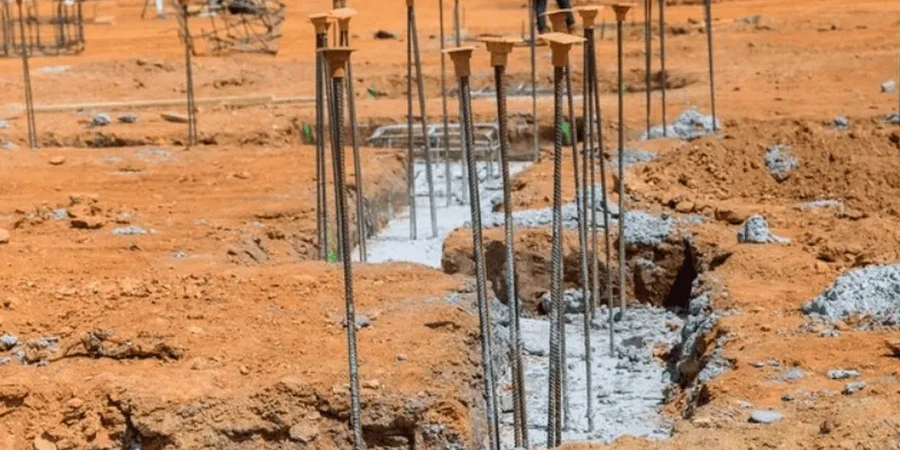
In Chilliwack, the choice depends heavily on soil conditions and project scale. Shallow foundations like strip footings and raft slabs are common for residential builds on competent soils. However, in areas with soft alluvial deposits or a high water table, deep foundation systems such as driven steel piles or cast-in-place concrete piles are often specified to reach stable bearing strata and manage settlement risks.
The Fraser Valley’s glaciomarine silts and clays can be highly compressible and sensitive to moisture changes. This requires foundations to be designed with adequate embedment and, in some cases, drainage systems to mitigate hydrostatic pressure. Expansive clay behaviour and liquefaction potential during seismic events are also key factors that geotechnical engineers evaluate through site-specific testing before recommending a foundation type.
The BC Building Code sets the minimum structural and safety standards for all foundations. It dictates requirements for minimum bearing capacity, lateral earth support, frost protection depth, and seismic resistance. In Chilliwack, compliance with the BCBC is mandatory for building permits, and professional engineers must certify that foundation designs meet or exceed these provincial regulations.
A deep foundation becomes necessary when near-surface soils lack sufficient bearing capacity, are highly compressible, or are subject to scour and erosion. In Chilliwack, this often occurs near rivers, in floodplains like Sumas Prairie, or on sites with thick organic deposits. Deep systems bypass weak layers and transfer structural loads to deeper, more competent soil or bedrock, ensuring long-term stability.