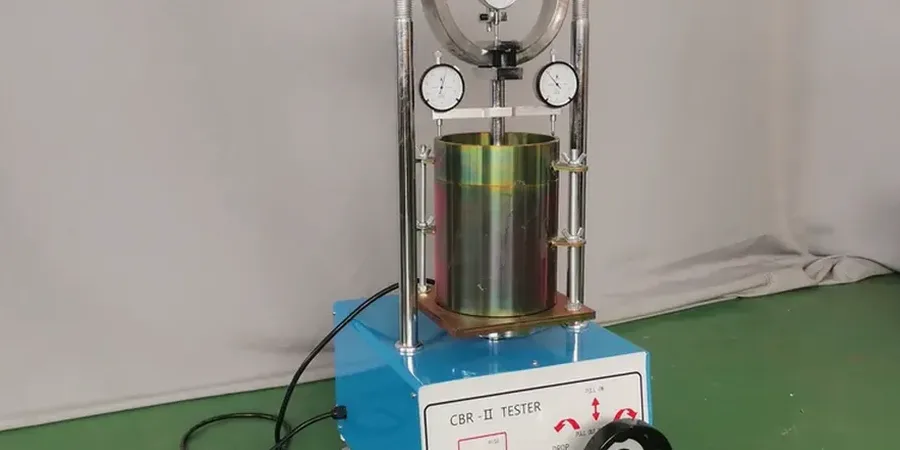
The contrast between the dense glacial till deposits near Promontory Heights and the alluvial silts along the Vedder River flats in Chilliwack means a single pavement design approach never works across the city. We have tested subgrade samples from the Sardis benchlands that delivered soaked CBR values above 20%, while material pulled from low-lying Fairfield Island often struggles to reach 3% once saturated. This variability is exactly why a laboratory CBR test becomes essential before committing to granular base thicknesses for any road, parking lot, or industrial yard in Chilliwack. The Fraser Valley’s high water table and seasonal flooding patterns add another layer of complexity that no empirical correlation from other regions can reliably capture. Running a soaked CBR under controlled ASTM conditions lets us quantify how the local subgrade will behave after a rainy November when construction compaction moisture is long forgotten.
Soaked CBR values in Chilliwack’s low-lying areas can drop below 3%, making laboratory testing the only reliable basis for deciding between a 200 mm or 400 mm granular base.