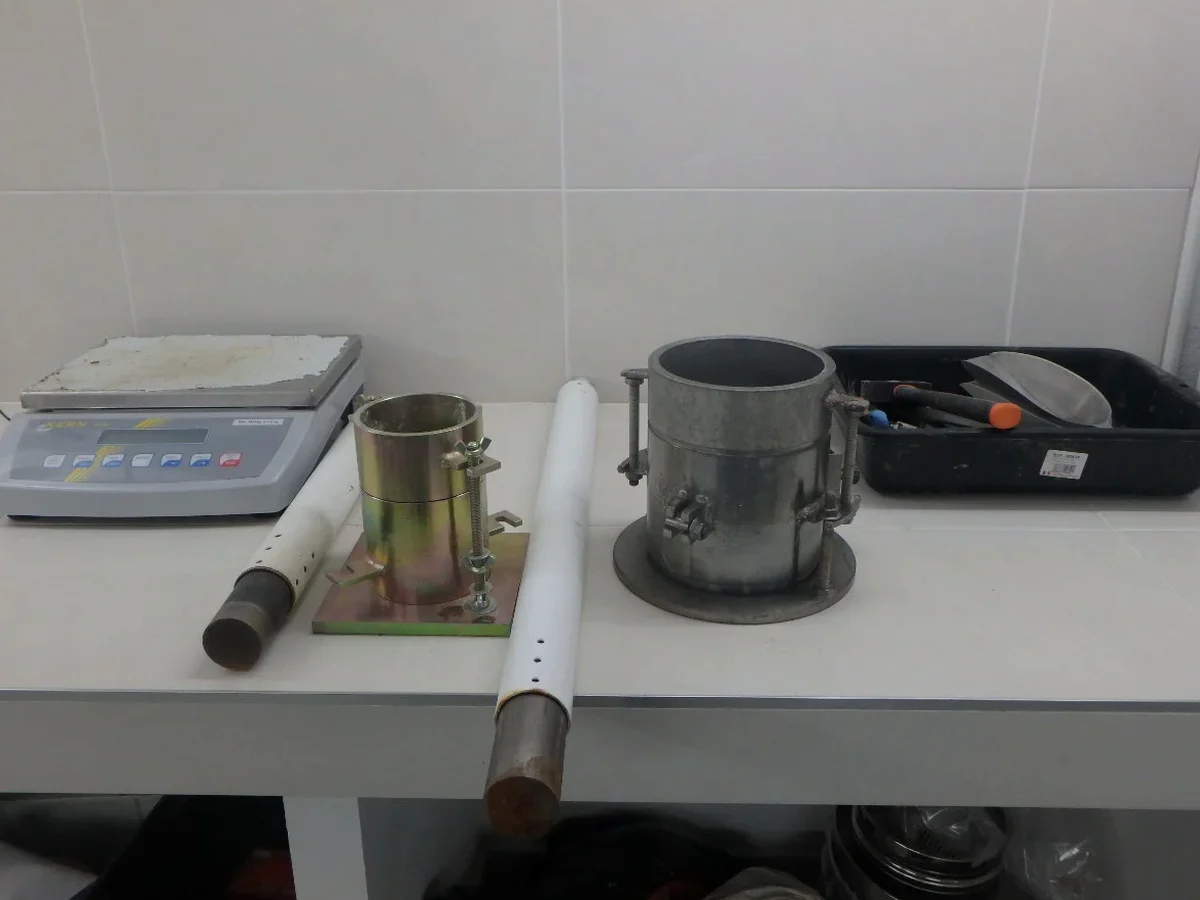
ASTM D698 and D1557 define the standard for compaction, but applying them correctly in Chilliwack means understanding the local geology. The city sits on a mix of glacial till, glaciomarine silts, and coarse Fraser River deposits, often with moisture contents that shift dramatically between rainy winters and dry summers. In our lab, we see a lot of samples where the natural water content is already near optimum, which changes the whole approach to field density testing. For projects in the Sardis or Promontory areas, knowing whether you are dealing with a well-graded till or a uniform silt makes the difference between a passing lift and a failed one. When the subgrade is questionable, we often recommend pairing this with a grain-size analysis to confirm the fines content, or with sand-cone density testing to verify the achieved compaction in the field.
In Chilliwack, a moisture deviation of just 1 to 2 percent can drop your field density below spec — we see it every week during the summer construction peak.
Site-specific factors
The transition from the wet coastal winter to the dry interior-influenced summer creates a unique risk window in Chilliwack. From November through March, stockpiles and exposed subgrades absorb moisture, pushing natural water content well above optimum. Contractors who rush to compact during a break in the rain often end up with a spongy, unstable surface that no amount of roller passes will fix. Then by July, the same silty material can be bone-dry and dusty, requiring significant water addition to approach the target density. Ignoring this seasonal swing leads to under-compacted structural fill, excessive post-construction settlement, and pavement distress within the first two years. For deep fills in the floodplain, we also recommend a liquefaction assessment when the water table is high, because loose saturated silts can lose strength rapidly under seismic loading.
Frequently asked questions
How much does a Standard Proctor test cost in Chilliwack?
A single-point Standard Proctor curve (ASTM D698) typically ranges from CA$120 to CA$180, while a full Modified Proctor (ASTM D1557) with a family of curves runs between CA$180 and CA$250, depending on the number of points and whether oversize correction is required.
When should I use Modified Proctor instead of Standard Proctor?
Modified Proctor applies a higher compactive effort and is generally specified for structural fill under foundations, pavement subbase, and airport runways. Standard Proctor is often used for landscaping fills, trench backfill for utilities, and some residential subgrades. Always follow the project specification; BC MoTI typically calls for Modified Proctor on highway work.
How long does a Proctor test take to run?
A single-point curve can be completed in about 4 to 6 hours, including drying time. A full multi-point curve with oversize corrections usually requires 24 hours. We can accommodate rush requests during the busy summer season if you coordinate with the lab ahead of time.
What is oversize correction and when do I need it?
Oversize correction applies when more than 5 percent of the material is retained on the 4.75 mm sieve. We use AASHTO T-224 to adjust the lab density upward, accounting for the rock fraction that does not fit in the Proctor mold. Gravelly tills in Chilliwack commonly trigger this correction.
Can you run a one-point Proctor for a quick field check?
We can, but only when the soil type is well-characterized and we have an established family of curves for that specific borrow source. A one-point test assumes the shape of the compaction curve is already known, which works for uniform pit-run materials but can be misleading in variable glacial deposits.